If you picture Savannah as a place you only visit for a weekend, you are missing what makes it so appealing to live in. In Savannah, historic streets, public squares, local shops, parks, and everyday errands often sit side by side. If you are trying to understand how daily life really feels across the city’s historic and urban neighborhoods, this guide will help you compare the rhythm, character, and convenience of each area. Let’s dive in.
Savannah’s Historic Core at a Glance
Savannah’s Historic Landmark District is not just a backdrop for visitors. According to the National Park Service, the city’s original plan has remained intact since 1733, and the district includes more than 1,100 residential and public buildings. That helps explain why downtown feels layered and lived-in instead of frozen in time.
Visit Savannah describes the historic core as having three distinct parts: the busier North Historic District near River Street, the quieter South Historic District with more residential charm, and the MLK Boulevard corridor that ties together culture, commerce, and access. If you are comparing areas, that means downtown Savannah is not one single experience. It is a collection of connected districts with different day-to-day feel.
Walkability in Downtown Savannah
One of the biggest draws of central Savannah is how easy it can be to get around without relying on your car for every short trip. CAT and the City of Savannah operate the free dot Express Shuttle and the Savannah Belles Ferry in the downtown core, and the shuttle runs every ten minutes at 18 stops throughout the Historic District. CAT also serves Savannah and Chatham County with fixed bus routes.
That setup supports a car-light lifestyle, especially for dining out, meeting friends, browsing shops, or heading to the park. Visit Savannah also notes that Savannah is a Bronze-Level Bicycle-Friendly Community, which adds another option for getting around. For many buyers, that convenience is a major part of the city’s appeal.
Everyday Spots That Shape Daily Life
River Street
River Street is one of Savannah’s most recognizable corridors, but it is more than a photo stop. Visit Savannah says the area includes more than 75 boutiques, galleries, artists’ studios, restaurants, and pubs set inside former cotton warehouses. That mix gives the riverfront an active, urban feel where history and current-day use overlap.
For everyday living, River Street can feel energetic and busy. If you enjoy being close to dining, river views, and constant activity, this part of town may fit your lifestyle. If you prefer a quieter home base, you may be more drawn to areas farther south.
City Market
City Market has a long history dating back to 1755, but today it functions as a social and creative hub. Visit Savannah describes it as a place for restaurants, art spaces, outdoor music, museums, shopping, and steady foot traffic. In practical terms, it adds another layer of convenience and activity to the downtown lifestyle.
This is the kind of area where an afternoon errand can easily turn into dinner or live music. For buyers who want an urban setting with constant movement nearby, City Market helps define that experience.
Broughton Street
Broughton Street is downtown Savannah’s main retail spine. Visit Savannah highlights its local boutiques, name-brand stores, and dining options, making it one of the most useful areas for daily convenience in the historic core.
If you want the ability to combine shopping, casual meals, and city living in one setting, Broughton Street is central to that appeal. It also helps balance Savannah’s historic character with practical, modern-day use.
Where Historic Savannah Feels More Residential
South Historic District
If you love historic surroundings but want a calmer atmosphere, the South Historic District is worth attention. Visit Savannah describes this part of the district as quieter, with residential charm and shaded streets. It offers a different pace than the busier riverfront blocks.
This area often appeals to buyers who want to stay near downtown conveniences while living in a setting that feels more neighborhood-oriented. It is a good reminder that living downtown does not always mean living in the middle of tourist activity.
Victorian District
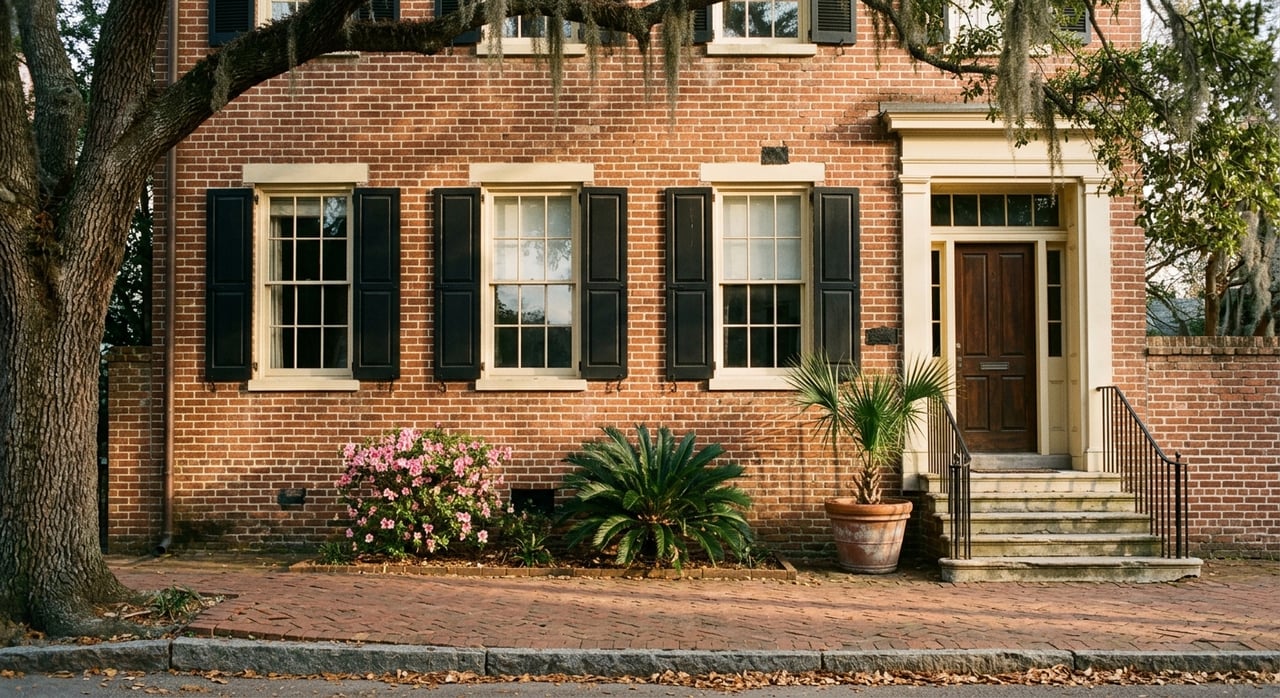
Just beyond the core, the Victorian District shows another side of historic residential life. Visit Savannah describes it as a 50-block neighborhood and Savannah’s first suburb, with narrow two-story homes, bay windows, decorative trim, and bright colors. The area is described as mostly residential, with a few small businesses mixed in.
Because it sits along the Whitaker Street side of Forsyth Park, the Victorian District connects closely to one of the city’s most loved public spaces. For buyers who want historic architecture with a more neighborhood-scale feel, this area often stands out.
Urban Neighborhoods Beyond the Core
Starland District
If you want a creative, more contemporary urban vibe, Starland offers a different experience from the formal historic grid. Visit Savannah says it begins just past the Historic District and stretches roughly 35 blocks from the south side of Forsyth Park to Victory Drive. The district is known for local artisans, restaurants, cafes, galleries, stores, and entertainment.
Starland Yard adds to that appeal with rotating food trucks, a pizzeria, a bar menu, and a weekly calendar of music, art, and culture. That combination gives Starland a lively, social feel that many buyers find appealing if they want an arts-and-cafes environment.
Midtown and Habersham Village
Midtown gives you a different version of city living. Visit Savannah describes Midtown as being at the center of the city with plenty of places to shop, eat, and relax, while still being only about a 10-minute drive from the Historic Landmark District. For many buyers, that makes Midtown a practical option if they want access without being in the middle of downtown.
Habersham Village helps reinforce that everyday convenience. The broader Midtown setting is useful for people who value routine-friendly amenities and a more spread-out urban feel.
Eastern Wharf and the Canal District
Savannah’s urban story is still evolving, and Eastern Wharf and the Canal District show where that growth is happening. Visit Savannah describes Eastern Wharf as a mixed-use riverfront district with restaurants, rooftops, outdoor spaces, and a riverfront promenade. It brings a newer, more modern layer to the city’s waterfront lifestyle.
The Canal District, west of downtown, is centered around Enmarket Arena and is described as a lively district with eateries, shops, green nooks, sports, and concerts. These areas are helpful to know if you want urban convenience but are also interested in Savannah’s newer mixed-use environments.
Parks and Green Space in Daily Life
Savannah’s public spaces are a major part of what makes everyday living here feel distinctive. The City of Savannah says Forsyth Park began in the 1840s, has grown to 30 acres, and includes the well-known 1858 fountain, sports courts, walking paths, monuments, and open green space. It is not just a landmark. It is part of many residents’ weekly rhythm.
The city’s historic squares work the same way on a smaller scale. The City of Savannah ties these public green spaces back to Oglethorpe’s original 1733 plan, and Wright Square is one of the oldest. Across the historic core, the squares act like neighborhood outdoor rooms where people pass through, pause, and gather.
Outside downtown, Daffin Park gives Midtown its own recreation anchor. Visit Savannah says the 80-acre park includes walking paths, tennis courts, basketball courts, jungle gyms, a dog park, and Grayson Stadium. That makes Midtown’s outdoor life feel more active and expansive than the pocket-like downtown squares.
Culture Is Part of the Routine
In Savannah, cultural events often feel tied to daily life rather than separate from it. Visit Savannah says the Savannah Music Festival has been running since 1989, brings hundreds of musicians, and uses historic venues across the city. Events like that keep the core active and connected to the wider community.
Forsyth Park also plays a major role in city life through annual events. The SCAD Sidewalk Arts Festival turns the park into an open-air gallery each spring, bringing residents and visitors into the same public spaces. The Savannah Book Festival also brings authors and readers into Historic Downtown Savannah.
For buyers considering an urban Savannah lifestyle, this matters. It means the neighborhood experience is shaped not only by buildings and streets, but also by recurring events, public gathering spaces, and a steady cultural calendar.
How to Think About Neighborhood Fit
If you are trying to narrow your search, it helps to think less about which neighborhood is best and more about which one fits your routine. The historic core offers walkability, character, and quick access to dining, parks, and retail. The South Historic District and Victorian District add a more residential feel while staying close to downtown energy.
Starland brings an eclectic and creative atmosphere. Midtown offers practical convenience, larger recreation spaces, and easier separation from the tourism-heavy blocks. Eastern Wharf and the Canal District show how Savannah is adding modern urban options to its historic foundation.
The right fit often comes down to how you want your day to flow. Do you want to walk to coffee and dinner, spend time in public squares, and stay close to downtown activity? Or do you want easy city access with a slightly quieter or more modern setting?
If you are weighing those options in Savannah, having local guidance can make the process much clearer. Marjorie Wester can help you compare neighborhoods, understand the lifestyle tradeoffs, and find a home that fits how you want to live.
FAQs
How walkable is Savannah’s Historic Landmark District?
- Savannah’s historic core is very walkable by local standards, and the free dot Express Shuttle and Savannah Belles Ferry make it even easier to move around downtown.
What does housing look like in Savannah’s historic neighborhoods?
- In the historic core, you will find a mix of restored mansions, adapted former commercial buildings, and historic homes, while the Victorian District is known for narrow two-story houses with bay windows and decorative trim.
Which Savannah neighborhoods feel more residential?
- The South Historic District and the Victorian District are among the clearest residential areas near downtown, while Midtown also offers a more routine-focused urban environment.
Which Savannah areas feel more artsy or contemporary?
- Starland stands out for its cafes, galleries, and local creative scene, while Eastern Wharf and the Canal District add newer mixed-use and entertainment-focused settings.
What everyday amenities stand out in Savannah’s urban neighborhoods?
- Parks, historic squares, coffee and dining corridors, local retail, cultural venues, and seasonal events all play a big role in everyday life across Savannah’s historic and urban districts.