Most Midtown sellers walk into a listing appointment thinking about the buyer's inspector. They picture a young couple, a clipboard, and a punch list that arrives at the end of the due diligence period. That picture is roughly a decade out of date. In Ardsley Park and Chatham Crescent, the decision that quietly kills or delays deals now happens weeks earlier, in an underwriter's queue, before any offer is written.
The thesis of this post is simple. If your Midtown home was built between 1910 and 1940, the buyer's insurance carrier is reading your roof, your electrical panel, and your crawlspace before the buyer's inspector ever schedules a visit. Prepare for that reader first, and the inspection report becomes a formality instead of a renegotiation.
The underwriter reads your listing before the buyer's inspector does
Savannah carriers have tightened underwriting on older housing stock. Many now restrict coverage on roofs older than fifteen to twenty years, and homes with plaster walls or knob-and-tube wiring often draw a request for upgrades before a policy will issue. Standard Savannah premiums land between $1,600 and $3,400 annually depending on age, roof condition, and coverage, with older-home carriers averaging around $1,857.
The practical implication for a Chatham Crescent seller with a 1928 bungalow is that the buyer's mortgage cannot close without a bindable homeowner's policy. If the underwriter flags the roof, the buyer's lender flags the file, and the transaction pauses regardless of what the inspection report says. This is why roof age is doing more work in Midtown negotiations than square footage right now.
Roof replacement in Savannah currently runs $7,500 to $15,000 for architectural shingles, $9,000 to $18,000 for impact-resistant shingles, and $15,000 to $30,000 for standing seam metal. Coastal installations cost roughly ten to fifteen percent more because of enhanced fastening and corrosion-resistant materials. Impact-rated shingles and wind mitigation features tend to earn meaningful premium discounts, which matters if the buyer is stretching to qualify.
The 2026 GAR forms changed more than most sellers realize
Georgia remains a caveat emptor state. No statute compels a seller to complete a disclosure form. That gets misread every summer. Under Georgia Code § 10-6A-5, the seller's real estate agent has an independent statutory duty to disclose known adverse material facts, and the seller retains liability for known latent defects that a buyer could not discover through a reasonably diligent inspection.
The Georgia Association of Realtors updated the F301 Seller's Property Disclosure and F302 Latent Defect Disclosure for 2026. Three changes matter for Midtown:
The entire Flooding and Water Intrusion section was rewritten to cover all known ways to ask the seller for historical details. The F302 added an explicit Buyer Beware warning. Propane and fuel tanks were added to the list of items that might be rented rather than owned.
That water-intrusion rewrite is the one to read carefully. If a crawlspace flooded during Debby or a prior storm season and you dried it out without a claim, that history is now the specific subject of a specific question. Silence on a specific question is a much harder legal position than silence in general.
Every home in Ardsley Park and Chatham Crescent also triggers federal Lead-Based Paint Disclosure. The neighborhood was platted in 1909 and 1910, and its housing stock dates from 1910 through the 1930s, well before the 1978 threshold. There is no as-is exception to this federal requirement and no substitute form. Buyers must receive the EPA pamphlet and a ten-day inspection opportunity.
The five findings a Midtown pre-listing walk-through reliably surfaces
Local inspectors including 912 Inspections, Savannah Home Inspections, HouseMaster of Savannah, and Certified Home Inspections all offer pre-listing walk-throughs that mirror what the buyer's inspector will see. In this specific housing stock, the same short list keeps repeating.
- Crawlspace moisture and vapor damage. Savannah's relative humidity runs seventy percent or higher year-round, and many pre-war homes sit on ventilated crawlspaces with original wood framing. Logan Wilson at Crawlspace Medic of Savannah has made the point publicly that crawlspace issues develop quietly, long before standing water or odor appears. Encapsulation, drainage, and a dehumidifier are showing up on more recent Ardsley Park sales as line items in the listing description because sellers learned they were losing offers without them.
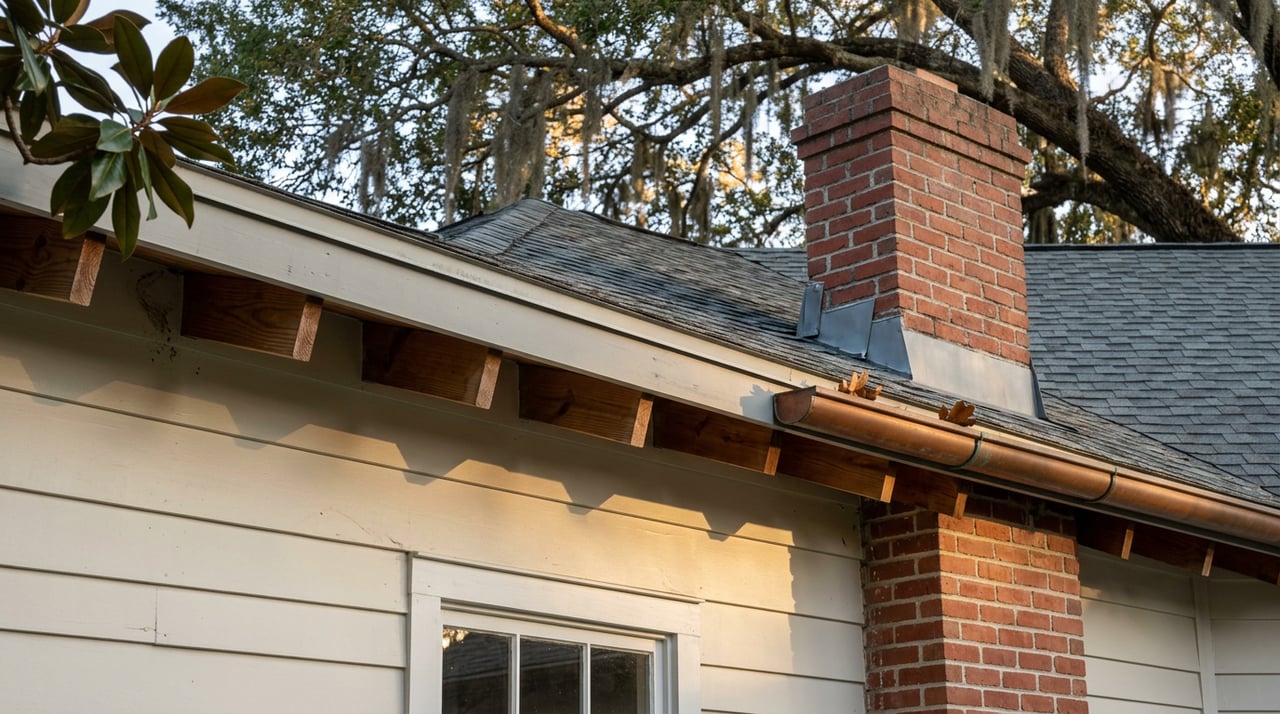
- Roof age and underlayment. A twenty-year-old roof that still sheds water passes an inspection but fails an underwriter. If the roof is close to that threshold, get a written condition letter from a licensed roofer before listing.
- Aging galvanized supply lines. Pinhole leaks behind plaster walls are a common Midtown finding. Replacement is usually cheaper than the renegotiation.
- Electrical panel and knob-and-tube remnants. Even where the main panel has been updated, junction boxes in the attic sometimes still connect to original cloth-insulated conductors. Insurers ask.
- HVAC condensate drainage and plaster ceiling stains. Clogged condensate lines in summer create ceiling stains that read as a roof leak to a buyer and as neglect to a carrier.
None of these are exotic. What matters is the sequence in which they get addressed.
A misconception that costs Ardsley Park sellers real money
Sellers in Chatham Crescent regularly ask whether they need Historic District Board of Review approval for a repair before listing. The answer, almost always, is no. Ardsley Park and Chatham Crescent have been listed on the National Register of Historic Places since 1985, but the district carries no local historic designation. HDBR jurisdiction covers the Landmark District downtown, where changes as small as exterior paint color require review.
Nick Palumbo, president of the Ardsley Park/Chatham Crescent Neighborhood Association, and Daniel Carey at the Historic Savannah Foundation have both been vocal that this leaves the neighborhood's fabric protected by community norms rather than a permitting layer. For a seller, the practical translation is that repainting a front door, replacing shingles in kind, or encapsulating a crawlspace does not require a review. Waiting for a phantom approval you do not need can push a listing out of a favorable market window.
Sequence the work so due diligence has nothing to catch
The buyers who tour Ardsley Park in the current cycle are informed. Their inspectors are experienced. Their lenders and insurers are strict. The pre-listing sequence that shortens due diligence to a formality looks like this:
- Book a pre-listing walk-through inspection two to four weeks before you plan to list. Ask for a written report you can share.
- Get a roof condition letter with an estimated remaining service life. If the roof is over fifteen years, price out impact-resistant replacement now and decide whether to do it or credit it.
- Have the crawlspace evaluated for moisture, and if you encapsulate, keep the paperwork with the transferable warranty.
- Complete the 2026 GAR F301 or F302 with your agent, paying particular attention to the rewritten Flooding and Water Intrusion section. If you do not know an answer, mark it unknown rather than guess.
- Assemble the federal Lead-Based Paint disclosure packet before you accept an offer, not after.
- If a defect is expensive and known, disclose it on paper and price accordingly. Documented and priced is a better negotiation posture than repaired and hidden.
That sequence does not eliminate friction. It moves friction to the front of the process, where you still have leverage, instead of the end, where you do not.
Frequently asked questions
Do I have to fill out a disclosure form in Georgia?
Georgia does not require a statutory form, but you retain liability for known latent defects, and your listing agent has an independent duty under Georgia Code § 10-6A-5 to disclose known adverse material facts. Most sellers complete the GAR F301 or F302 because it documents what you actually knew at the time of sale.
Does the Historic District Board of Review govern my Ardsley Park home?
No. HDBR jurisdiction covers the Landmark District downtown. Ardsley Park and Chatham Crescent are on the National Register but carry no local historic overlay, so exterior changes do not require HDBR approval.
Is a pre-listing inspection worth the cost?
For homes built before 1940 in Midtown, generally yes. It converts unknown findings into priced findings before a buyer's inspector uses them as leverage during the due diligence period.
What is the wind and hail deductible I should expect for a buyer's policy?
Many Georgia carriers set a separate wind and hail deductible at one to two percent of dwelling coverage. On a $300,000 dwelling policy at one percent, that is $3,000 out of pocket before wind or hail coverage applies. This affects how much home a given buyer can qualify to carry, so it indirectly affects your pricing.
If you own a home in Ardsley Park, Chatham Crescent, or the pre-war streets around Habersham Village and you are thinking about listing this year, the pre-listing conversation is worth having earlier than most people schedule it. Marge Wester walks Midtown sellers through this sequence one item at a time, in plain language, before the first showing. Let's connect.